Permanent Magnet Air Compressor for Construction Sites – Reliable Performance in Outdoor Working Conditions
News 2025-11-17
Permanent magnet air compressors are becoming a preferred choice for construction sites that demand stable compressed air in harsh outdoor environments. From road building and tunnel excavation to bridge maintenance and prefabricated concrete work, contractors depend on air power for drilling, breaking, sandblasting, and pneumatic tool operation. A permanent magnet compressor combines high efficiency with compact structure, helping site managers reduce energy waste, improve uptime, and keep projects running to schedule even under fluctuating loads and demanding weather conditions.
Performance Advantages in Outdoor Working Conditions
A permanent magnet motor delivers high efficiency across a wide speed range, making it well suited to construction tasks where air demand frequently changes. Unlike traditional fixed-speed compressors that often run unloaded or at partial load, variable-speed permanent magnet units adjust motor speed to match actual air consumption. This reduces electrical losses, lowers discharge temperature, and extends the life of bearings, valves, and filters. The motor’s sealed design and reduced vibration enhance reliability in dusty, humid, or high‑temperature outdoor locations, where conventional motors are more prone to overheating and failure.
Key Application Scenarios on Construction Sites
On highways and municipal projects, permanent magnet air compressors provide continuous air supply for rock drills, impact wrenches, and pavement breakers. In tunnel construction and mining-related work, stable pressure is critical for shotcrete spraying, grouting, and air-powered ventilation equipment. For building sites and steel structure installation, these compressors support painting, sandblasting, and precise fastening operations. Their compact footprint and skid or trailer-mounted configurations enable flexible positioning near the point of use, helping reduce hose length, pressure drop, and energy consumption while improving tool response.
Energy Savings, Maintenance, and Cost Control
Energy cost is a major factor in long-term construction projects. A permanent magnet air compressor can achieve significant power savings through high motor efficiency, optimized control logic, and reduced unloading time. Frequency conversion keeps starting current low, protecting cables and power distribution systems on temporary site grids. Maintenance intervals are extended thanks to fewer mechanical losses, more stable operating temperature, and improved lubrication conditions. With lower oil carryover, filtration systems remain cleaner, protecting downstream equipment such as pneumatic cylinders, valves, and surface treatment tools, ultimately reducing unscheduled downtime and repair expenses.
Role in Industrial Processes and Quality Assurance
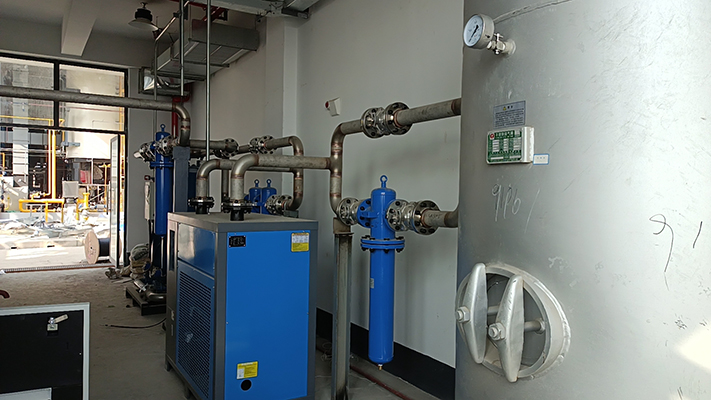
Compressed air quality directly affects the performance of construction processes that must meet strict industrial standards, such as structural grouting, precision drilling, or corrosion-protection coating. Permanent magnet compressors paired with advanced dryers and filters help maintain stable pressure and clean, dry air, reducing defects like voids in concrete, irregular anchor installation, or coating blistering. Their consistent output supports automated and semi-automated construction equipment, aligning with modern lean construction and digital site management strategies. As more contractors adopt energy monitoring and smart control systems, permanent magnet units integrate easily via PLC or remote platforms, enabling data-driven optimization of air usage across multiple zones.
1. How does a permanent magnet air compressor save energy on construction sites?
By adjusting motor speed to match actual air consumption, it minimizes unloaded running, lowers electrical losses, and keeps discharge temperature under control, resulting in reduced kWh per cubic meter of air.
2. Is a permanent magnet compressor suitable for harsh outdoor environments?
Yes, its high-efficiency sealed motor, robust cooling design, and low vibration structure support stable operation in dusty, humid, or high-temperature conditions common on construction sites.
3. What applications on construction projects benefit most from this technology?
Pneumatic drilling, breaking, sandblasting, spray painting, grouting, and shotcrete operations benefit significantly, as they require stable pressure, continuous airflow, and low downtime to maintain productivity and quality.