Permanent Magnet Air Compressor for Aluminum Extrusion – Stable Pressure for Extrusion Machinery
News 2025-11-17
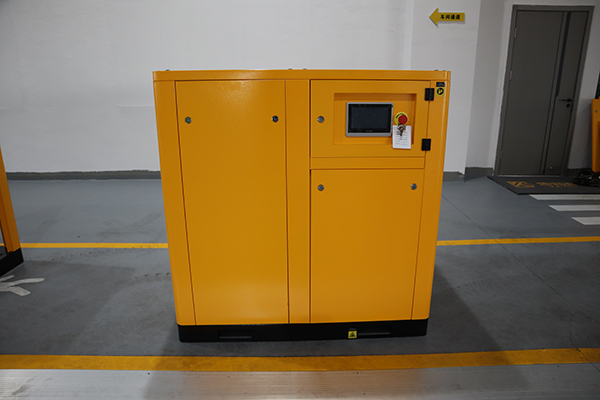
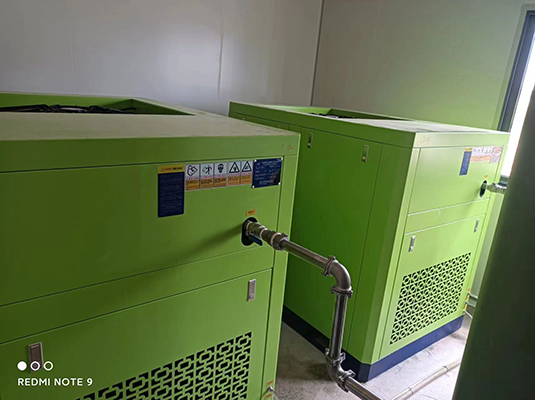
Permanent magnet air compressors play a decisive role in modern aluminum extrusion plants, where every fluctuation in air pressure affects profile accuracy, surface finish, and production speed. In extrusion presses, die opening, billet loading, cooling systems, and pneumatic actuators all depend on clean, stable compressed air. A permanent magnet variable speed compressor delivers tightly controlled pressure and flow, supporting continuous operation and reducing scrap ratios. For manufacturers seeking consistent quality and lower lifecycle cost, this technology has become a strategic investment rather than a simple utility.
Key Role in Aluminum Extrusion Lines
In an aluminum extrusion workshop, compressed air powers cylinder movements on the press, handling systems for billets and profiles, automatic sawing equipment, and packaging stations. Pressure stability protects hydraulic and pneumatic valves from impact loads and keeps profile dimensions within tight tolerances. When pressure drops, extrusion speed becomes unstable, causing defects such as twisting or uneven wall thickness. A permanent magnet air compressor, sized correctly for the entire line, maintains a steady air supply even during peak demand when multiple actuators and tools operate simultaneously.
Performance Advantages of Permanent Magnet Technology
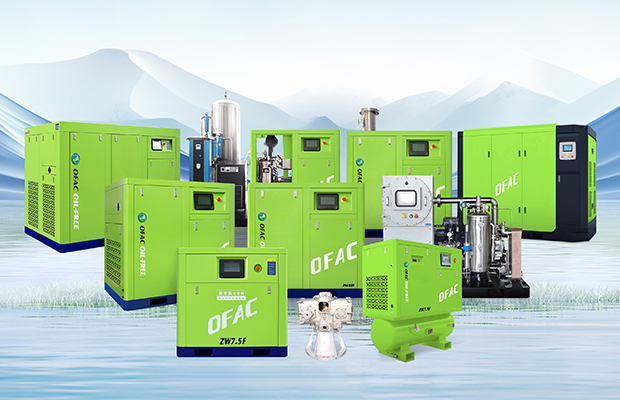
Permanent magnet motors deliver high efficiency across a wide speed range, especially under partial load, which is common in extrusion plants with changing shifts and product mixes. Integrated variable speed control adjusts motor rotation in real time according to actual air consumption, preventing energy waste from unload running. High-efficiency motor design reduces temperature rise, extending bearing and insulation life. Many units include advanced air ends, low-loss intake valves, and optimized cooling systems, resulting in lower specific power, reduced noise, and minimized vibration compared with conventional fixed-speed compressors.
Stable Pressure, Quality Output, and Cost Control
Stable discharge pressure is crucial for consistent lubrication, die cooling, and precise operation of servo-pneumatic components. With accurate pressure sensors and intelligent controllers, permanent magnet compressors keep pressure fluctuations within a very narrow band, often less than ±0.1 bar. This stability supports smooth extrusion speed, cleaner cut ends, and uniform anodizing results downstream. Lower energy consumption directly cuts operating expenses, while improved reliability reduces unplanned downtime. The combination of energy savings, fewer rejected profiles, and extended equipment lifetime significantly improves overall production economics.
Installation, Maintenance, and System Integration
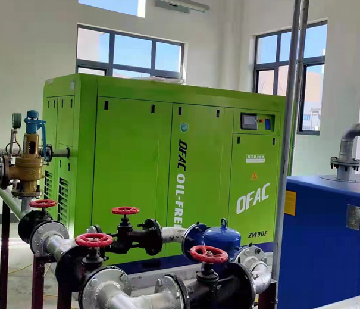
Integrating a permanent magnet air compressor into an extrusion plant involves proper sizing, piping layout, and air treatment selection. Dryers and filtration units protect sensitive valves, cylinders, and instrumentation from moisture and particle contamination. Modern units support centralized monitoring and Industry 4.0 platforms, enabling remote diagnostics, predictive maintenance, and trend analysis for energy audits. Maintenance tasks mainly focus on regular filter changes, oil quality checks for lubricated models, and inspection of the cooling system. When combined with air receivers and well-designed distribution networks, the compressor becomes the stable core of the entire pneumatic system.
1、How does stable air pressure affect extrusion quality?
Stable pressure maintains constant extrusion speed and precise actuator movement, reducing dimensional deviation, surface defects, and scrap.
2、Why choose a permanent magnet variable speed compressor?
It offers high efficiency across varying loads, lower energy consumption, and reduced mechanical stress on system components.
3、What air treatment is recommended for aluminum extrusion plants?
Use refrigerated or desiccant dryers with multi-stage filtration to deliver dry, clean air that protects valves, cylinders, and extrusion control equipment.