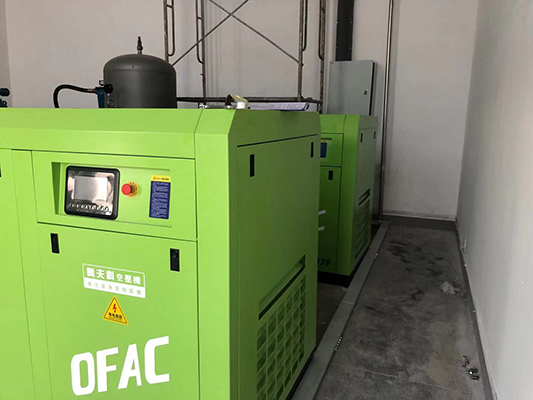
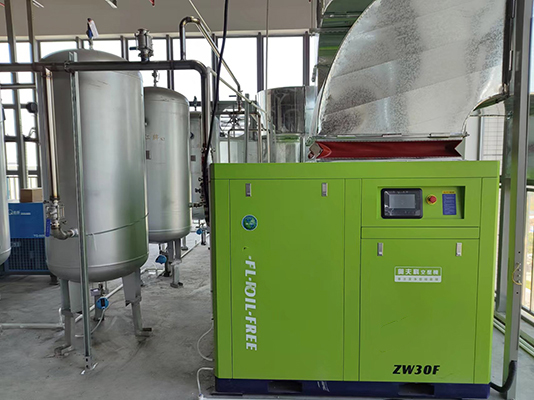
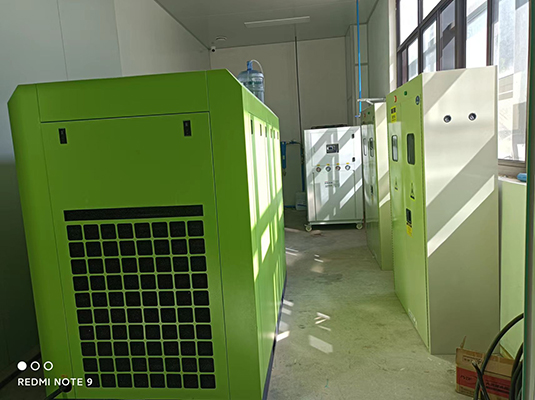
Factory-grade water-lubricated oil-free screw air compressor industrial standards
News 2025-11-17
Factory-grade water-lubricated oil-free screw air compressor industrial standards
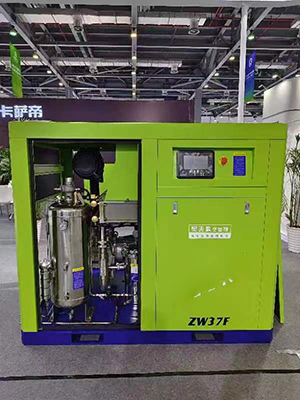
Standardization in Clean Industrial Air Supply
Factory-grade water-lubricated oil-free screw air compressors have become a key benchmark in clean compressed air systems for modern plants. Industrial standards focus on oil-free compression chambers, hygienic water lubrication circuits, and low carryover of impurities, ensuring compressed air quality meets ISO 8573-1 Class 0 or equivalent requirements. These standards are especially critical in food and beverage, pharmaceuticals, electronics, and precision coating processes, where even trace oil contamination can cause rejected batches, equipment malfunction, or regulatory non-compliance. By conforming to rigorously verified performance and safety criteria, these compressors support stable, high-volume air supply while minimizing environmental impact and downstream filtration loads.
Key Performance Advantages and System Efficiency
Compared with conventional oil-lubricated designs, water-lubricated oil-free screw compressors offer superior thermal management, reduced friction loss, and inherently cleaner compression. Industrial specifications emphasize high isothermal efficiency, wide turndown ratio, and precise pressure control to match variable demand. The water circuit absorbs heat during compression, helping maintain lower discharge temperatures and improving overall energy efficiency. At factory scale, this reduces operating costs and supports long, continuous duty cycles. Additionally, design standards address low noise, minimal vibration, and optimized rotor profiles, which extend component life and reduce unplanned downtime, all while delivering consistent air quality across multiple production lines.
Application Scenarios Across Critical Industries
In pharmaceutical and biotech plants, these compressors are integrated into cleanroom environments, sterile packaging systems, and pneumatic conveying of active ingredients, where validated oil-free air is mandatory. In food and beverage production, they supply process air for aeration, bottling, and packaging, preventing oil migration into products or contact surfaces. Semiconductor and electronics facilities rely on factory-grade water-lubricated oil-free screw compressors for wafer handling, instrument actuation, and dry-room environments, where particles and hydrocarbons must be strictly controlled. Even in general manufacturing, such as automotive painting, precision machining, and textile processing, adopting these systems improves product finish, reduces reject rates, and strengthens compliance with occupational health and environmental regulations.
Compliance, Lifecycle Management, and Future-readiness
Industrial standards also address the entire lifecycle of water-lubricated oil-free screw compressors, from material selection and corrosion resistance to smart monitoring and maintenance strategies. Stainless steel or specially coated internal components safeguard the water circuit against scaling and microbial growth, while integrated sensors continuously monitor temperature, pressure, dew point, and water quality. When combined with remote diagnostics and predictive maintenance algorithms, operators can schedule service intervals based on real operating data, reducing unexpected outages. Compliance with energy-efficiency regulations, environmental directives, and sector-specific hygiene norms enhances plant certifications and customer trust. As factories move toward digitalized, low-carbon production, these compressors form a scalable, standards-based foundation for cleaner, more efficient compressed air infrastructures.
1. What industries benefit most from these compressors?
They are widely used in pharmaceuticals, food and beverage, electronics, automotive painting, and any process where oil-free, clean compressed air is critical for product quality and compliance.
2. How do water-lubricated oil-free units cut operating costs?
By improving heat removal and reducing friction, they raise energy efficiency, lower cooling and filtration requirements, and decrease downtime, which collectively reduces total cost of ownership.
3. Are they suitable for retrofitting existing compressor rooms?
Yes, most factory-grade units can be integrated into existing networks, provided that piping, drainage, and control systems are properly adapted to meet water management and air quality standards.