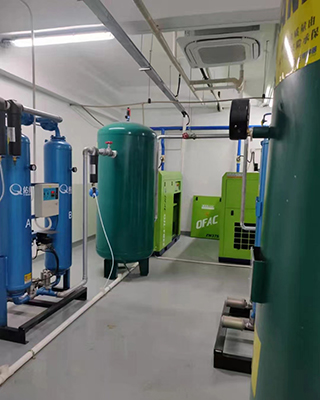
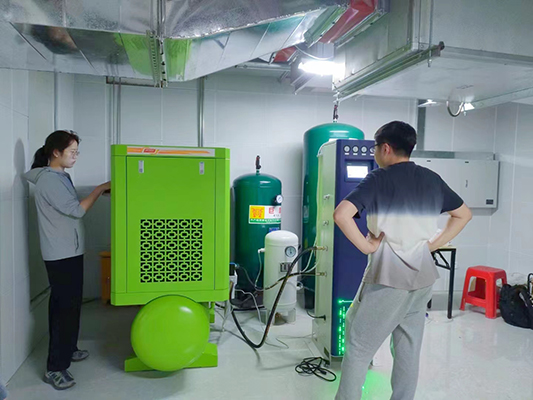
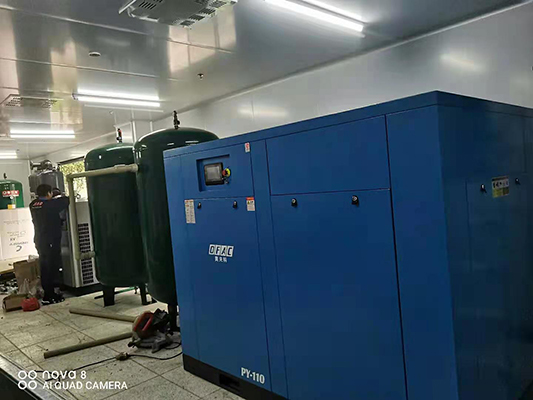
Low-vibe water-lubricated oil-free screw air compressor smooth running in modern industry
News 2025-11-17
Low-vibe water-lubricated oil-free screw air compressor smooth running
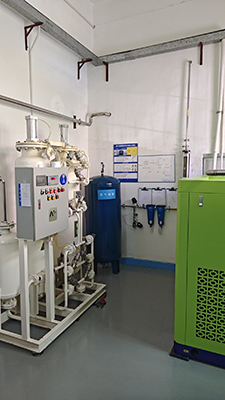
Core working principle and structural design
The low-vibe water-lubricated oil-free screw air compressor is engineered around a twin-screw airend in which purified water replaces traditional oil as the sealing and cooling medium. Water enters the compression chamber to absorb heat, seal clearances, and reduce internal leakage, allowing the rotors to run at lower temperatures and smoother torque. Because no lubricating oil is injected into the compression path, the discharged air remains completely oil-free, protecting downstream processes and instrumentation. The integrated design usually combines variable-speed drive, precision water filtration, and automatic water management, ensuring consistent performance, minimized pulsation, and extended service life of core components.
Key performance advantages and energy efficiency
Compared to conventional oil-injected compressors, this water-lubricated oil-free screw unit delivers outstanding energy efficiency and low mechanical losses. The excellent heat capacity of water keeps internal temperatures down, so compression is closer to isothermal, improving specific power and reducing kWh per cubic meter of air produced. Low vibration reduces mechanical stress on bearings and couplings, cutting maintenance frequency and unexpected shutdowns. In addition, the oil-free design eliminates pressure drop across oil separators, lowers filter replacement costs, and prevents product contamination, which directly translates into reduced total cost of ownership and improved lifecycle profitability for industrial users.
Industrial application scenarios and process benefits
This type of compressor is particularly valuable in industries where air purity, stable pressure, and acoustic comfort are strategic. Food and beverage plants use it to supply packaging, pneumatic conveying, bottle blowing, and cleaning lines without risk of oil carryover onto products. In pharmaceuticals and biotechnologies, clean oil-free air protects reactors, clean rooms, and sterile packaging systems. Electronics, semiconductor, and precision instrument manufacturers rely on low-vibration operation to minimize structural resonance near sensitive equipment and clean environments. In automotive, textile, and printing facilities, quiet low-vibe operation and oil-free output support accurate control of actuators, clutches, spray systems, and finishing processes while keeping maintenance areas safer and cleaner.
Operation, maintenance, and long-term stability
Stable long-term running depends on professional installation, correct sizing, and disciplined maintenance routines. Low vibration reduces fatigue on frames and foundations, enabling continuous operation in 24/7 production environments. Routine service focuses mainly on water quality management, filter changes, and inspection of the water circuit, rather than oil replacement and separator maintenance. Intelligent control systems monitor temperature, pressure, vibration, and water conductivity, generating early warnings before performance drifts. This predictive approach supports higher compressor availability, optimized load-unload cycles, and better alignment between air supply and actual demand, which is crucial for energy-saving strategies and carbon reduction targets across modern plants.
Concise FAQs
1. Where is this compressor most commonly used?
It is widely used in food, beverage, pharmaceutical, electronics, automotive, and packaging plants where oil-free, low-vibration compressed air is critical to product quality and production stability.
2. How does water lubrication improve performance?
Water absorbs heat efficiently and seals rotor clearances, lowering discharge temperatures, reducing energy consumption, and helping the machine run more smoothly and quietly.
3. Does it reduce overall operating costs?
Yes, energy savings, fewer mechanical failures, no oil separator parts, and reduced risk of product contamination combine to significantly lower lifecycle operating and maintenance costs.