Manufacturing-use water-lubricated oil-free screw air compressor production needs
News 2025-11-17
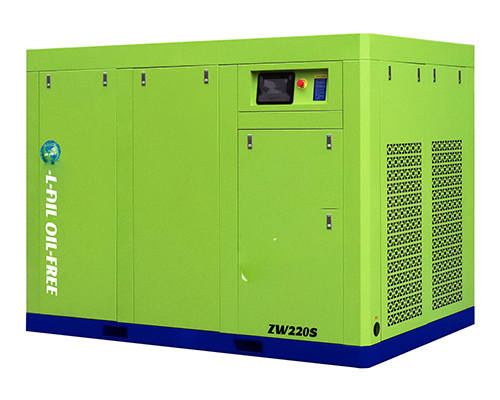
Manufacturing-use water-lubricated oil-free screw air compressor production needs are driven by stricter quality, safety, and sustainability requirements across modern plants. From food packaging lines to pharmaceutical cleanrooms and high-precision electronics assembly, producers demand compressed air that is clean, stable, and energy-efficient. Water-lubricated oil-free screw technology eliminates oil carryover risk while maintaining continuous duty performance, making it a strategic choice wherever compressed air directly or indirectly contacts products, instrumentation, or critical surfaces.
Core production demands and application scenarios
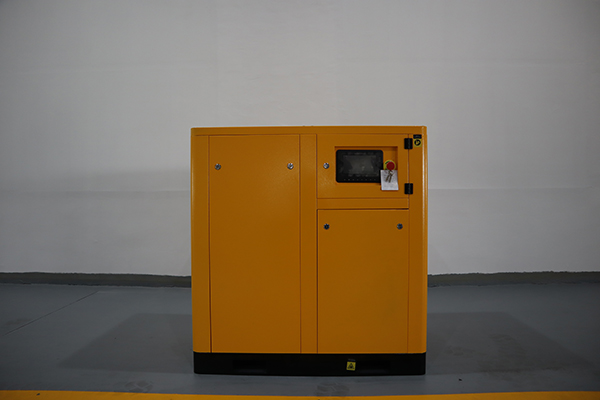
In manufacturing environments, water-lubricated oil-free screw air compressors must support 24/7 operation across diverse application scenarios. Typical uses include pneumatic conveying systems in food factories, sterile air supply for tablet coating, and precise tool control in automotive and aerospace assembly. These compressors are also widely used in textile spinning, glass production, and beverage bottling lines where oil contamination would lead to product rejection or equipment damage. Production needs therefore focus on stable discharge pressure, accurate flow matching to shifting process loads, and integration into automated plant control systems and smart factory networks.
Performance characteristics and quality control
Key performance requirements include high isothermal efficiency, low specific power consumption, and minimized pressure drop across dryers and filters. Because water acts as the primary lubricating and cooling medium, the compression chamber can maintain lower temperatures, which reduces wear and extends screw element life. Manufacturers must design corrosion-resistant materials and precise sealing systems to prevent water leakage and maintain long-term oil-free performance. Strict quality control, from rotor machining accuracy to dynamic balancing and complete machine testing, ensures vibration levels remain low and noise emissions comply with plant standards, supporting comfortable and safe working environments.
System integration, maintenance, and lifecycle cost
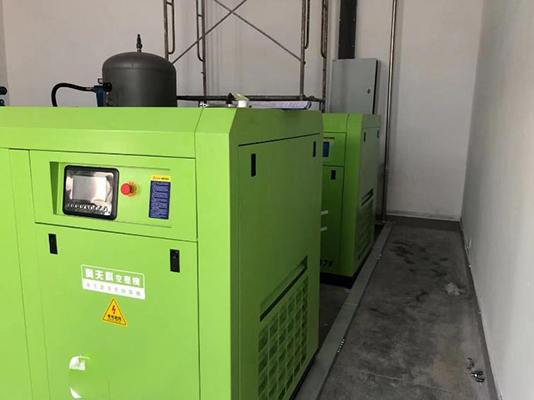
Production lines require air systems that are easy to integrate into centralized compressed air networks. Modern water-lubricated oil-free screw compressors are expected to offer variable speed control, advanced PLC or touch-screen interfaces, and remote monitoring capability. Maintenance needs center on simple water circuit management, efficient separation and treatment of discharged water, and fast access to filters and coolers. Over the lifecycle, plant managers evaluate total cost of ownership, including energy consumption, maintenance intervals, downtime risk, and compliance costs linked to product quality incidents. Proper sizing, piping design, and heat recovery options further improve economic performance of the compressed air station.
Environmental impact, industry standards, and future trends
Environmental regulations and sustainability targets strongly influence production requirements. Water-lubricated oil-free screw air compressors avoid oil disposal issues and can support environmentally conscious brand positioning. Compressed air quality must meet ISO 8573 standards, while many factories also follow sector-specific norms for pharmaceuticals, dairy, and microelectronics. Future development is moving toward higher energy efficiency classes, integration into industrial IoT platforms, predictive maintenance based on data analytics, and optimized water management systems that reduce consumption and facilitate recycling. These trends ensure that compressors not only meet current manufacturing demands but also remain aligned with long-term industrial transformation.
1. Key sectors using water-lubricated oil-free compressors
They are widely used in food and beverage, pharmaceuticals, electronics, textiles, automotive assembly, and other sectors where clean, oil-free compressed air is critical.
2. Main advantages over oil-lubricated compressors
They eliminate oil contamination risk, simplify air treatment, enhance product safety, support regulatory compliance, and can achieve competitive energy efficiency and lower lifecycle costs.
3. Factors to consider when selecting a unit
Users should evaluate required flow and pressure, air quality class, energy efficiency, integration with control systems, water quality and treatment, noise limits, and after-sales service capability.