fixed speed screw air compressor Noise Reduction Strategies Factory Teams Use
News 2025-12-22
Fixed speed screw air compressor noise directly affects worker comfort, regulatory compliance, and perceived product quality in modern factories. As production lines become more automated, plant engineers expect air systems that deliver stable pressure while maintaining strict acoustic targets around assembly cells, packaging areas, and testing laboratories. Effective noise reduction is now part of overall compressor performance, not a secondary add‑on.
Key Industrial Noise Sources
Noise in fixed speed screw compressors mainly comes from the airend, drive train, cooling fans, and intake systems. High rotational speeds generate broadband mechanical noise, while pulsations inside the compression chamber create aerodynamic noise that propagates through piping and into production zones. Poorly isolated bases transfer structure‑borne vibration to concrete floors and steel platforms, amplifying sound levels near CNC machines, paint booths, and robotic cells. Understanding these sources allows maintenance teams to choose targeted reduction strategies instead of generic insulation.
Engineering Measures to Lower Sound Levels
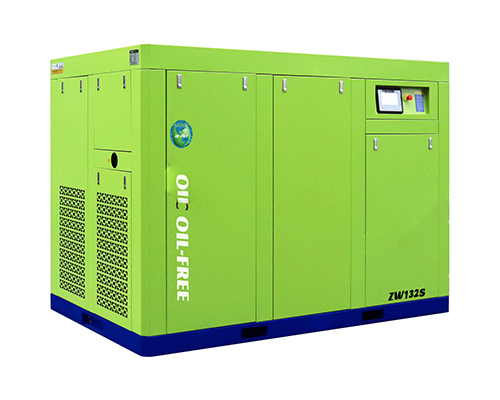
Factory teams typically combine acoustic enclosures, low‑noise intake filters, and optimized fan designs to bring compressor noise within OSHA and EU workplace limits. Double‑layered soundproof cabinets using perforated metal and dense insulation absorb high‑frequency components without restricting service access. Flexible couplings, anti‑vibration mounts, and precision rotor balancing reduce mechanical transmission and extend bearing life. Correct pipe diameter, smooth bends, and properly sized aftercoolers minimize turbulent flow and high‑velocity discharge noise in downstream air networks supplying tools, conveyors, and packaging equipment.
Performance Benefits in Production Environments
Lower compressor noise directly improves communication on the shop floor, allowing operators to hear alarms, instructions, and quality feedback near critical production stations. Quieter operation also supports night shifts in mixed‑use facilities close to residential areas, reducing complaints and avoiding fines. Because many acoustic solutions—such as improved cooling airflow, high‑quality bearings, and efficient airends—also cut energy consumption, plants gain lower life‑cycle costs and more stable pressure at fixed speed settings, which is crucial for paint spraying, precision clamping, and leak testing applications.
Implementation, Monitoring, and FAQs
Successful noise reduction programs combine initial acoustic measurements, vendor recommendations, and routine monitoring using handheld sound level meters or integrated sensors in the compressor controller. Data trends help maintenance teams schedule filter changes, fan servicing, and enclosure inspections before sound levels creep above corporate standards. Integration into factory management systems ensures that compressed air performance, energy KPIs, and acoustic compliance are tracked together as part of continuous improvement initiatives.
1. How quiet can a fixed speed screw air compressor become?
Well‑engineered units in full enclosures often achieve 65–75 dB(A) at one meter, suitable for most general production areas.
2. Does noise reduction affect compressor efficiency?
When correctly designed, acoustic measures typically improve efficiency because they optimize cooling, air flow, and mechanical balance.
3. Where are low‑noise compressors most valuable?
They are critical near assembly lines, laboratories, food and beverage packaging, and any production area where workers stay close to the equipment for long periods.