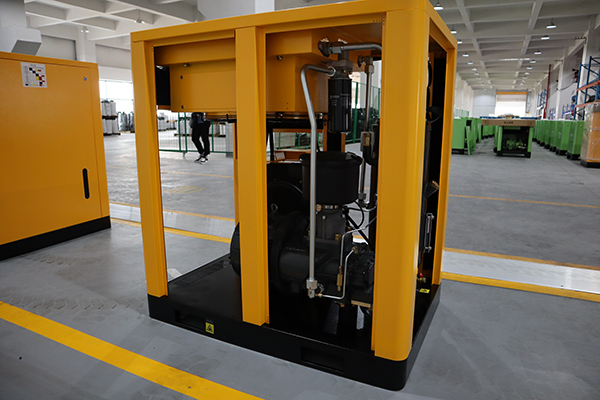
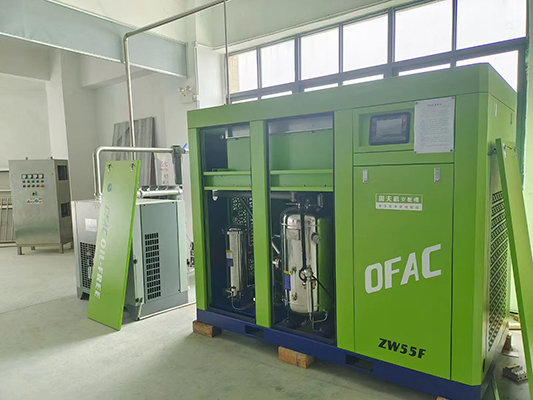
Permanent Magnet Air Compressor for Printing Industry – Precise Pressure Regulation for Printing Presses
News 2025-11-17
Permanent magnet air compressors are becoming a core component in modern printing plants, where process stability, ink transfer, and registration accuracy depend on clean, consistent compressed air. From sheet‑fed offset presses to high‑speed flexographic and digital lines, air quality and pressure precision directly affect dot sharpness, color uniformity, and machine uptime. By combining high‑efficiency permanent magnet motors with intelligent pressure control, these compressors deliver the dependable airflow that printing operations require around the clock.
Critical Role in Printing Applications
Compressed air powers a wide range of printing equipment, including pneumatic cylinders for sheet feeding, grippers and clamps, web tension control, air knives for drying, and automated cleaning systems. In packaging and label production, air controls doctor blades, tension rollers, and precise actuation of cutting and creasing units. Any fluctuation in pressure can lead to misfeeds, smeared prints, registration errors, and wasted substrates. Permanent magnet air compressors maintain tight pressure bands, safeguarding production quality on long print runs and fast changeover jobs.
Performance Advantages of Permanent Magnet Technology
Permanent magnet motors deliver higher efficiency and lower energy loss than traditional induction motors, especially under variable loads typical of print shops with multiple presses starting and stopping. When combined with variable speed drive control, the compressor matches air output to real‑time demand, reducing energy consumption and heat generation. The result is lower operating costs, reduced carbon footprint, and quieter operation on the production floor. High‑precision pressure sensors and smart controllers maintain stable discharge pressure, minimizing pulsation that could impact delicate printing and finishing steps.
Impact on Process Stability and Product Quality
Stable compressed air contributes directly to consistent ink laydown, accurate dot reproduction, and predictable drying performance. For UV and water‑based systems, air pressure affects spray patterns and air‑knife efficiency, which in turn influence gloss, adhesion, and curing speed. Permanent magnet air compressors with integrated dryers and filtration deliver dry, oil‑free or low‑oil air that protects valves, nozzles, and cylinders from contamination. This improves press reliability, extends component life, and reduces unplanned stoppages, allowing printers to maintain tight delivery schedules and high customer satisfaction.
Integration, Maintenance, and System Optimization
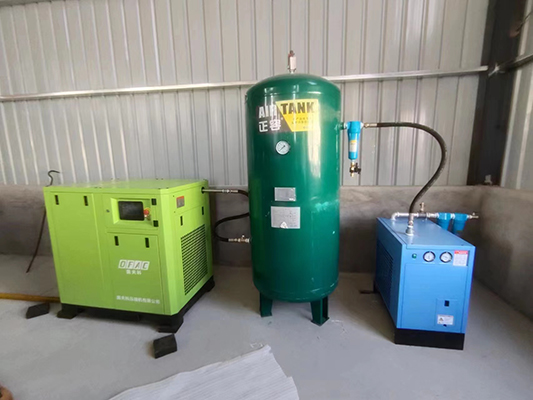
In a modern print facility, the air compressor operates as part of a centralized compressed air network supplying multiple presses and finishing lines. Permanent magnet units can be fitted with advanced monitoring, remote diagnostics, and leak detection support to optimize system efficiency. Compact footprints and low vibration simplify installation close to the production area, reducing piping losses. Routine maintenance is streamlined through accessible service points and intelligent alerts that help planners schedule work during downtime, ensuring continuous operation and predictable lifecycle costs.
1、How does precise pressure regulation benefit printing quality?
Tight pressure control prevents sheet misalignment, uneven ink transfer, and unstable web tension, resulting in sharper images, consistent color, and fewer rejected prints.
2、Why choose a permanent magnet air compressor for a print shop?
Permanent magnet technology increases energy efficiency, cuts power costs, and keeps pressure stable under changing load conditions common in multi‑press environments.
3、Is it important to treat compressed air in printing applications?
Yes, proper drying and filtration protect sensitive pneumatic components and keep air knives, valves, and nozzles performing reliably, which supports cleaner, defect‑free printing.