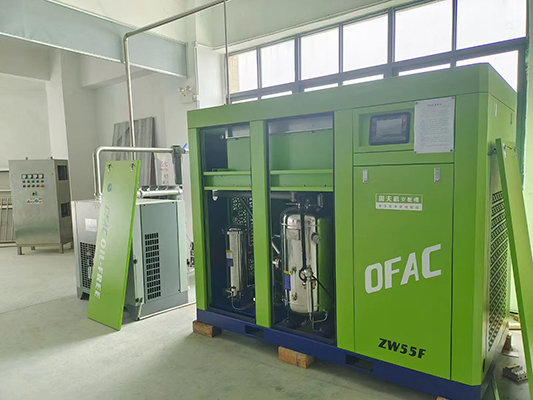
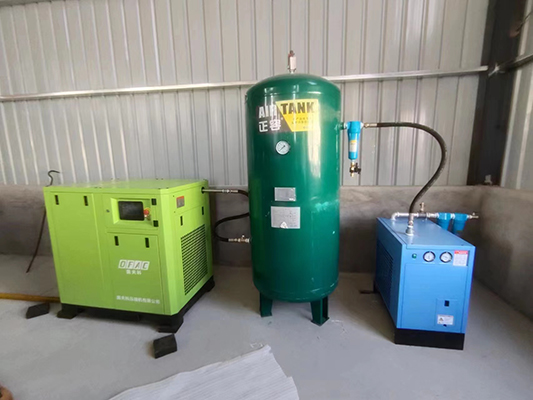
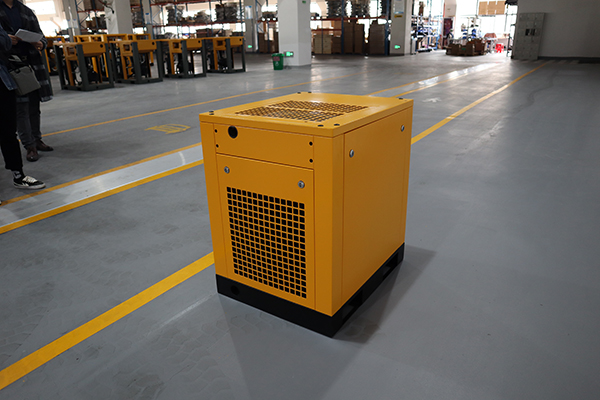
Permanent Magnet Air Compressor for Rubber Tire Manufacturing – Stable Pressure for Tire Building Machinery
News 2025-11-17
Permanent magnet air compressors are becoming a core utility in modern rubber tire manufacturing plants. Tire building, curing, cutting, and testing lines all depend on continuous, stable compressed air to maintain process accuracy and production speed. Fluctuating air pressure causes uneven rubber application, poor bead seating, and variations in tire geometry. By using permanent magnet technology, factories gain tighter control over pressure and flow while cutting energy consumption and maintenance costs.
Key Role in Tire Building Machinery
Tire building machinery requires synchronized operation of bladders, pneumatic cylinders, grippers, and inflation units. Each of these stations depends on a consistent air supply to position plies, belts, and sidewalls with millimeter-level accuracy. A permanent magnet air compressor responds quickly to changing air demand when different stages of the building drum cycle on and off. This rapid response keeps line pressure within a narrow band, helping reduce scrap rates, minimize rework, and maintain uniform tire quality across multiple production shifts.
Performance Advantages and Energy Savings
Permanent magnet motors deliver high efficiency over a wide operating range. When integrated with variable speed control, the compressor automatically adapts motor speed to actual air consumption from tire presses, extruders, and buffing machines. This avoids frequent load–unload cycles and cuts idling losses that are common with fixed-speed units. Lower operating temperature, reduced vibration, and soft starting behavior extend component life and keep oil carryover low, which protects downstream equipment such as air dryers, filters, and precision valves used throughout the tire plant.
Process Stability and Product Quality
Stable pressure is critical during tire shaping, green tire transfer, and vulcanization. Variations in compressed air can alter bladder expansion profiles, change clamping forces on building drums, and affect the uniformity of venting air in curing presses. A permanent magnet air compressor provides consistent airflow and pressure to these operations, supporting precise control of rubber distribution and ply alignment. This stability contributes to better uniformity indices, improved balance, and enhanced durability of finished tires, which is essential for meeting OEM and replacement market quality requirements.
Integration, Monitoring, and Maintenance
Modern permanent magnet compressors integrate easily into plant air systems that serve mixers, calenders, bead winding equipment, and automated inspection lines. Intelligent controllers enable real-time monitoring of pressure, temperature, power consumption, and maintenance intervals. Connectivity with plant management systems allows energy audits, leak detection programs, and predictive maintenance planning. These capabilities reduce unplanned downtime on critical tire building machinery and help production managers maintain consistent throughput while optimizing lifecycle cost.
FAQ on Permanent Magnet Air Compressors for Tire Plants
1How does a permanent magnet compressor improve tire quality?
By delivering stable pressure and quick response to demand changes, it keeps tire building and curing machinery operating within tight tolerance, which supports uniform ply placement, accurate shaping, and consistent curing results.
2Is it suitable for both new and existing tire factories?
Yes. Permanent magnet air compressors can be installed in new plants or retrofitted into existing central air systems, often replacing multiple smaller units while improving efficiency and pressure stability.
3What maintenance benefits does it offer?
High efficiency and lower running temperatures reduce wear on bearings, seals, and electrical components, extending service intervals and decreasing unexpected downtime across the tire manufacturing process.