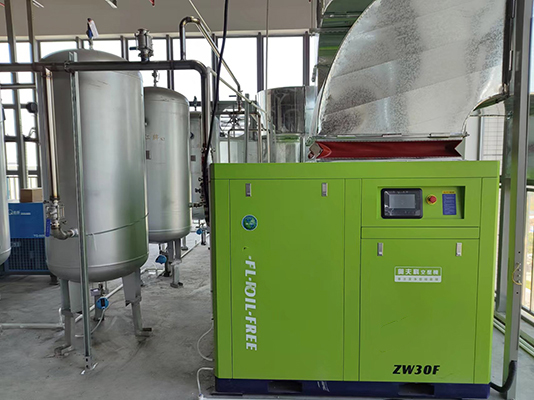
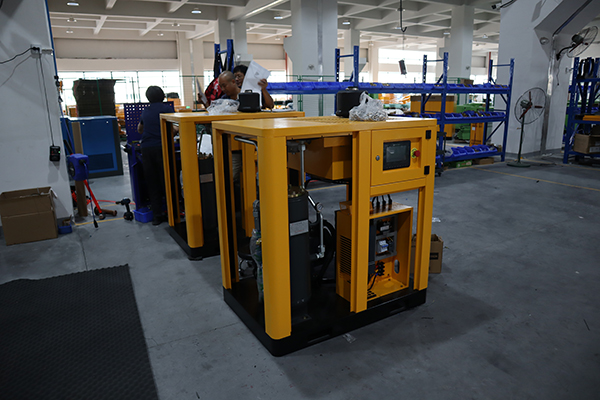
Clean-air water-lubricated oil-free screw air compressor pure output
News 2025-11-17
Clean-air water-lubricated oil-free screw air compressor pure output
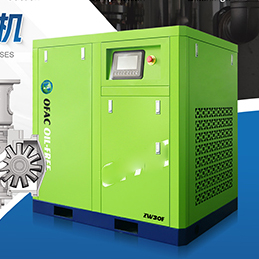
Clean Compression for Sensitive Industries
Water-lubricated oil-free screw air compressors are engineered to deliver ultra-clean compressed air where even trace oil contamination is unacceptable. Instead of mineral or synthetic lubricants, purified water performs cooling and sealing functions inside the compression chamber, ensuring that the delivered air is free from oil aerosols and vapors. This makes the technology highly suitable for demanding sectors such as food and beverage processing, pharmaceutical manufacturing, biotechnology, precision electronics, medical devices, and high-purity packaging. In these applications, clean compressed air is often directly or indirectly in contact with products, packaging films, mixing tanks, or pneumatic valves that influence product quality and regulatory compliance.
Key Performance Features and Operating Benefits
The water-lubricated design provides stable isothermal compression, which limits temperature rise inside the screw element and improves energy efficiency compared to conventional dry-running units. Because water has excellent thermal capacity, the compressor maintains a narrow discharge temperature range, protecting seals and extending component life. The absence of oil also removes the need for complex multi-stage filtration to reach Class 0 oil-free air, reducing pressure drops and energy losses. Users benefit from quiet operation, lower vibration levels, and simplified condensate management, since the condensate is largely free from oil and easier to treat. In continuous-duty industrial environments, these performance advantages translate into reduced operating costs, fewer unplanned shutdowns, and better long-term stability of downstream equipment.
Application Scenarios Across Modern Industry
In food and beverage plants, oil-free water-lubricated screw compressors supply clean air for conveying ingredients, filling and capping lines, bottle blowing, and nitrogen generation systems, helping avoid product taint, odor, or microbial growth linked to oil residues. Pharmaceutical facilities use this technology for cleanroom utilities, tablet pressing, blister packaging, sterile filtration support, and control air to critical valves, where regulatory frameworks demand documented purity and risk mitigation. Electronics and semiconductor production lines rely on pure compressed air to actuate robotic arms, control wafer handling tools, and purge process chambers without introducing hydrocarbons that could damage micro-scale circuits. Even in general manufacturing, these compressors support painting, surface treatment, precision tooling, and instrumentation where surface quality and equipment uptime are directly influenced by air cleanliness.
Role in Sustainable and Compliant Industrial Processes
Water-lubricated oil-free screw air compressors contribute significantly to environmental performance and regulatory compliance. Eliminating oil from the compression stage reduces the volume of hazardous waste associated with oil changes, used filters, and contaminated condensate. This helps facilities meet stricter environmental rules and corporate sustainability targets, while lowering the lifecycle cost of waste handling and treatment. High energy efficiency improves overall plant energy intensity and supports decarbonization initiatives by reducing indirect CO2 emissions. At the same time, certified oil-free air provides strong support for meeting international air quality standards and industry-specific validation requirements, including ISO-based purity classifications. As companies adopt cleaner production strategies, these compressors become key infrastructure assets that protect product integrity, safeguard brand reputation, and stabilize total cost of ownership.
Short Questions and Answers
1. Why choose a water-lubricated oil-free screw compressor?
It delivers oil-free, high-purity air while improving energy efficiency, minimizing filtration complexity, and supporting strict quality and environmental standards in sensitive industrial processes.
2. Which industries benefit most from this technology?
Food and beverage, pharmaceuticals, biotechnology, medical devices, electronics, and any manufacturing site where oil contamination could damage products, equipment, or regulatory compliance all gain major benefits.
3. How does it support sustainability goals?
By eliminating oil in the compression chamber, it reduces hazardous waste, lowers energy consumption through efficient cooling, and helps plants cut emissions and operating costs over the equipment lifetime.