Damp-environment water-lubricated oil-free screw air compressor corrosion resistance
News 2025-11-17
Damp-environment water-lubricated oil-free screw air compressor corrosion resistance
Corrosion challenges in damp industrial environments
In many plants, high ambient humidity, condensed process vapors, and frequent washdowns create a harsh atmosphere for compressed air equipment. Traditional oil-injected compressors rely on oil films that can degrade under moisture, exposing metal surfaces to oxygen and dissolved contaminants. This accelerates pitting, crevice corrosion, and surface scaling, increasing leakage and reducing compression efficiency. In food, pharmaceutical, textile, and electronics facilities, where moisture in the air and on surrounding structures is unavoidable, operators need a screw air compressor that resists corrosion while maintaining stable delivery pressure, clean air quality, and low life-cycle cost.
Water-lubricated oil-free screw design and protective materials
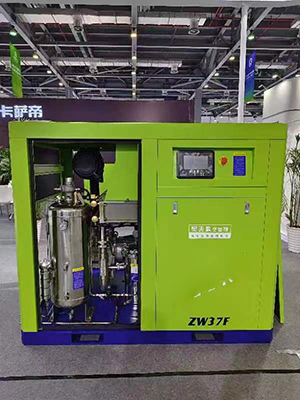
Water-lubricated oil-free screw compressors are engineered to address these conditions through dedicated material selection and internal architecture. The compression chamber, rotors, and housings often use stainless steels, specialized coated alloys, and high-performance polymers that resist oxidation and chemical attack from dissolved salts and cleaning agents. Precisely controlled water injection forms a lubricating and cooling film between the rotors, eliminating the need for hydrocarbon oil. This design minimizes metal-to-metal contact, reduces surface temperatures, and prevents the formation of hot spots where corrosion typically initiates, particularly in damp environments and during frequent starts and stops.
Performance advantages and long-term corrosion resistance
From a performance perspective, the corrosion-resistant configuration helps maintain tight internal clearances and smooth rotor profiles over many operating years. Stable clearances preserve volumetric efficiency, so the compressor delivers consistent flow and pressure without excessive energy consumption. The water circuit continuously removes heat and flushes away particles, limiting the build-up of deposits that can trap moisture and promote localized corrosion. The absence of oil not only simplifies condensate treatment but also eliminates the risk of oil breakdown products attacking seals, bearings, or coatings. This directly supports low maintenance requirements and reduces unplanned downtime caused by corrosion-related failures.
Key applications and impact on critical industrial processes
Corrosion-resistant, water-lubricated oil-free screw air compressors are particularly valuable where damp conditions and strict air purity demands intersect. Typical applications include food and beverage packaging lines, dairy and brewery operations, pharmaceutical production, cleanroom utilities, textile humidification systems, and coastal manufacturing sites exposed to salt-laden air. In these scenarios, compressed air is frequently in direct or indirect contact with products, so preventing rust particles and oil aerosols from entering the air network is vital. By ensuring long service life of the compression elements and piping under humid conditions, these compressors help protect product quality, minimize contamination risks, and keep critical processes running continuously.
Maintenance, energy efficiency and common questions
Scheduled inspection of the water quality, filters, and corrosion-resistant components is recommended to sustain optimal performance in damp environments. Using treated water with controlled hardness and low chloride content prevents scaling and under-deposit corrosion in the water circuit. Combined with variable speed control and optimized inlet filtration, plant operators can achieve high energy efficiency while maintaining corrosion protection.
1What industries benefit most?
Food, beverage, pharmaceutical, electronics, textile, and coastal plants gain the greatest advantages because they combine humid conditions with strict cleanliness requirements.
2Does water lubrication replace traditional oil systems?
Yes, the water film handles lubrication, sealing, and cooling in the compression stage, eliminating oil in the air path and simplifying condensate management.
3How does corrosion resistance affect operating cost?
By reducing internal wear, leaks, and component replacement, corrosion-resistant designs cut downtime, extend overhaul intervals, and significantly lower total cost of ownership.