fixed speed screw air compressor Air Quality Output Variations Explained
News 2025-12-22
Fixed speed screw air compressor Air Quality Output Variations Explained
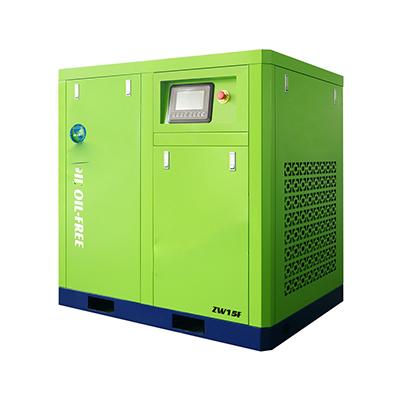
How Fixed Speed Screw Compressors Influence Air Quality
Fixed speed screw air compressors deliver a constant shaft speed, but air quality at the outlet can still vary significantly. In automotive plants, food packaging lines or electronics workshops, even small fluctuations in oil carryover, moisture content or particle load can lead to scrap, rework or product contamination. Air quality is shaped by intake conditions, compression temperature, lubrication system, filtration stages and dryer performance. When ambient humidity rises or dust levels change, the compressor and its treatment chain react differently, creating variations in dew point, residual oil and solids loading, even though flow rate and pressure seem stable to the operator.
Key Factors Behind Outlet Air Quality Variations
The main drivers of quality variation are temperature swings, load profile, maintenance status and treatment design. A fixed speed unit running near full load generates higher discharge temperatures, which increase moisture saturation and demand more from downstream dryers. In stop–start or low-demand conditions, condensation can accumulate in receivers and piping, carrying rust, scale and microbes back into the air stream. Worn inlet filters allow fine dust into the compression chamber, overloading coalescing filters and raising particle counts. Inadequate condensate drains cause water slugging, leading to intermittent spikes in moisture content that can damage pneumatic tools and paint systems.
Performance Advantages in Industrial Applications
In many continuous-duty applications, such as steel fabrication, textile production and general manufacturing, fixed speed screw compressors are valued for stable pressure, strong efficiency at full load and predictable service intervals. When paired with correctly sized dryers, oil separators and point-of-use filters, they can consistently reach ISO 8573 air quality classes demanded by high-precision processes. Their simple control philosophy reduces complexity, easing integration into existing compressor rooms and centralized air networks. The key performance advantage lies in maintaining narrow pressure bands and temperature stability, which indirectly supports more consistent dew point and lower oil carryover across shifts and seasonal changes.
Ensuring Stable Air Quality in Critical Processes
Industries such as pharmaceuticals, food and beverage, and electronics assembly require rigorous control of air purity to protect product integrity and regulatory compliance. For these processes, monitoring air quality variations from fixed speed screw compressors is as important as monitoring pressure and flow. Installing multi-stage filtration, refrigerated or desiccant dryers, and smart drains minimizes fluctuations. Continuous measurement of dew point, differential pressure across filters and oil vapor levels allows maintenance teams to intervene before quality drifts beyond specification. Integrating the compressor system into plant SCADA or IoT platforms enables trend analysis, predictive maintenance and energy optimization while maintaining stable, high-purity compressed air.
1, Why does air quality change if speed is fixed?
Because ambient conditions, thermal load, filtration performance and condensate management all vary over time, affecting moisture, oil and particles even at constant shaft speed.
2, Which applications need the most stable air quality?
Pharmaceutical production, food packaging, beverage bottling, electronics assembly and high-end painting systems demand tight control of air purity and dew point.
3, How can a plant stabilize outlet air quality?
By using proper pretreatment, multi-stage filtration, suitable dryers, reliable condensate drains and continuous monitoring integrated into a structured maintenance program.