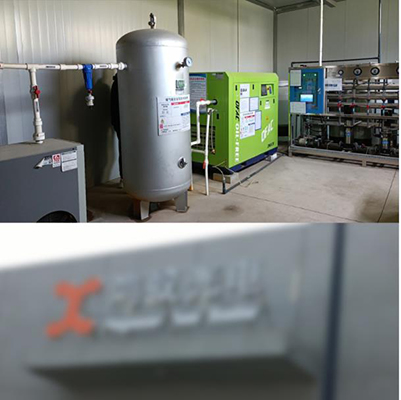
Precision water-lubricated oil-free screw air compressor clean air output
News 2025-11-17
Precision water-lubricated oil-free screw air compressors are redefining clean compressed air generation in modern industry. By combining water lubrication, oil-free compression chambers, and high-accuracy screw rotors, these systems deliver stable air quality that meets strict regulatory standards. From electronics manufacturing and pharmaceutical production to food packaging and medical equipment, they help plants secure consistent output, improve product safety, and reduce contamination risk, while also supporting energy-saving and sustainability goals.
Clean Air Performance and Oil-Free Design
A water-lubricated oil-free screw air compressor uses purified water to seal, cool, and lubricate the compression stage instead of mineral or synthetic oil. This eliminates the danger of oil carryover into the air network and downstream equipment. The air discharged can reach extremely low oil content, supporting compliance with high air purity classes and helping protect sensitive processes such as sterile filling, precision coating, and clean-room assembly. The absence of oil also simplifies filtration systems, reduces the load on adsorption dryers and filters, and helps lower operating costs associated with consumables and maintenance.
Energy Efficiency, Stability, and Long-Term Durability
High-precision screw rotors, optimized water-injection control, and intelligent variable-speed drives allow these compressors to operate close to the actual air demand, cutting unnecessary energy consumption. The water used during compression provides excellent heat absorption, enabling lower compression temperatures and improving volumetric efficiency. This results in higher free air delivery per kilowatt and more stable discharge pressure, which is crucial for continuous production lines, automated packaging systems, and robotic assembly cells. Reduced mechanical friction and smooth torque transfer contribute to extended component life and fewer unplanned shutdowns.
Key Industrial Application Scenarios
In the food and beverage sector, precision water-lubricated oil-free screw compressors supply hygienic air for product conveying, bottling, canning, nitrogen generation, and packaging film control, minimizing the risk of flavor alteration or microbiological contamination. In pharmaceutical and biotechnology facilities, they support clean-room ventilation, tablet pressing, fermentation aeration, and sterile filtration systems. Electronics and semiconductor plants rely on ultra-clean compressed air for wafer handling, surface cleaning, and instrumentation. Hospitals and laboratories use these compressors for medical air networks, dental tools, and high-purity gas systems where patient safety and test accuracy are paramount.
Control Systems, Safety, and Environmental Benefits
Modern water-lubricated oil-free screw air compressors integrate advanced PLC control platforms, touch-screen interfaces, and remote monitoring through industrial communication protocols. Real-time supervision of pressure, temperature, water quality, and power consumption helps maintenance teams optimize performance and plan predictive interventions. The use of water as a lubricant avoids disposal of waste oil and reduces carbon footprint associated with oil production and transport. Low noise and vibration levels improve workplace comfort and facilitate indoor installation close to the point of use, shortening piping runs and decreasing pressure losses across the system.
FAQ: Practical Points for Plant Engineers
1. How does water lubrication improve air quality?
By replacing oil with water in the compression chamber, there is virtually no risk of oil aerosols entering the compressed air, making it easier to meet clean air specifications and reduce downstream filtration complexity.
2. Is a water-lubricated oil-free compressor suitable for continuous operation?
Yes. Designed for demanding industrial duty, these compressors provide stable pressure, efficient cooling, and low wear, making them suitable for 24/7 operation in automated production environments.
3. What maintenance aspects should users focus on?
Key tasks include monitoring water quality, checking filtration elements, verifying cooling performance, and following scheduled inspections of screw rotors, seals, and control valves to preserve efficiency and air purity over the long term.