Economical water-lubricated oil-free screw air compressor cost-saving operation
News 2025-11-17
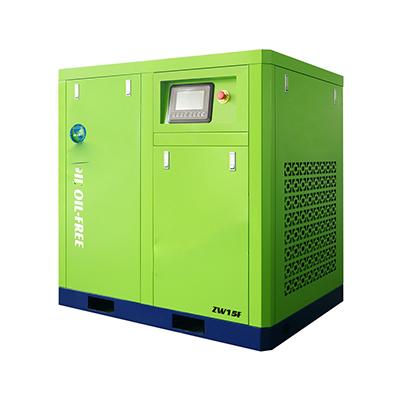
Economical water-lubricated oil-free screw air compressor cost-saving operation delivers clean, dry and efficient compressed air for demanding industrial users focused on cost control and sustainability. By replacing traditional oil-lubricated systems, it removes the risk of oil contamination, reduces maintenance tasks and optimizes energy consumption across continuous-duty applications. This technology is increasingly adopted in industries where air quality, operating stability and lifetime cost are critical KPIs for production managers and plant engineers.
Core technology and operating principle
Water-lubricated oil-free screw air compressors use water as the sealing and cooling medium inside the compression chamber. The rotor pair runs without oil, while a controlled water circuit absorbs compression heat, improves sealing between rotors and stabilizes discharge temperature. Because the compression process is cooler and more isothermal, the compressor requires less power for the same output pressure, directly lowering kWh per cubic meter of air. The absence of oil also simplifies internal design, minimizes carbon deposits and maintains consistent performance over long running hours. Integrated electronic controllers constantly adjust motor speed, water flow and discharge pressure for optimized operation.
Key performance advantages and cost savings
The main performance advantage is completely oil-free compressed air that meets strict ISO air quality standards, reducing or eliminating downstream filtration and adsorption costs. Lower discharge temperatures extend component life, protect seals and reduce stress on piping. High efficiency motor and rotor design, often combined with variable speed drive, cuts energy consumption, which is the largest lifetime cost of any compressor installation. Fewer lubricants, simplified servicing and longer service intervals reduce maintenance expenses and downtime. Over the full lifecycle, these factors translate into a significantly lower total cost of ownership and faster return on investment compared to conventional oil-injected machines.
Industrial applications and process importance
Water-lubricated oil-free screw technology is ideal for industries where air purity and process safety are non-negotiable. Typical applications include food and beverage packaging, dairy processing, pharmaceutical manufacturing, medical devices, electronics assembly, textiles, and precision coating lines. In these environments, any oil carryover can cause product rejection, regulatory non-compliance or damage to sensitive equipment. Consistent, oil-free air supports stable pneumatic control, clean conveying, sterile packaging and contamination-free instrument air. The compressor becomes a critical utility, directly influencing product quality, batch consistency, line uptime and energy intensity across the entire plant.
Installation, operation and sustainability benefits
Thanks to reduced ventilation needs and low noise levels, these compressors can be installed closer to production areas, shrinking piping length and lowering pressure drop. Smart control systems allow integration into plant management platforms for remote monitoring, predictive maintenance and load sharing between multiple units. Water treatment and recirculation systems minimize consumption, making the solution compatible with corporate sustainability targets. By cutting energy use and avoiding oil disposal, operators improve their environmental footprint and support ISO 14001 and ESG reporting requirements.
1. How does water lubrication reduce energy costs?
Water provides superior cooling and sealing, enabling near-isothermal compression and lower discharge temperatures, which reduces power demand and improves overall efficiency.
2. Is oil-free compressed air necessary in all industries?
Not in all industries, but it is crucial wherever air contacts products, packaging or sterile processes, or where contamination could trigger quality issues, recalls or regulatory violations.
3. What impact does this technology have on maintenance planning?
Maintenance becomes more predictable and less intensive, with fewer oil-related tasks, extended service intervals and better alignment with condition-based monitoring programs.