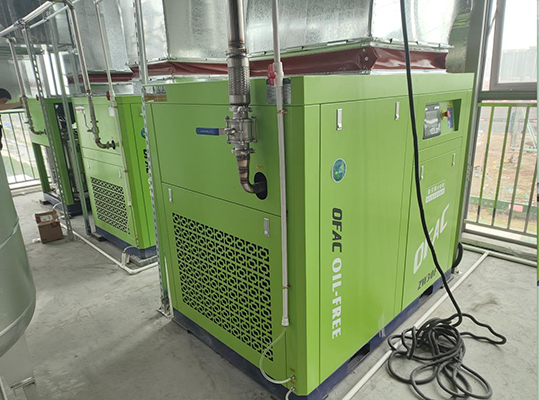
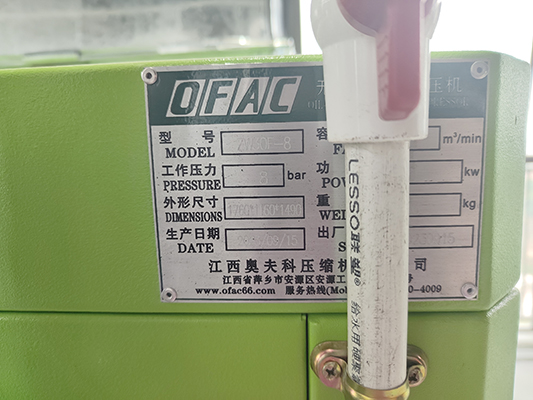
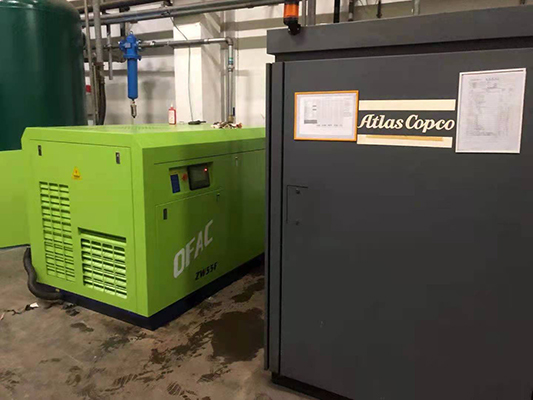
Industrial-demand water-lubricated oil-free screw air compressor heavy industry
News 2025-11-17
In heavy manufacturing, energy-intensive plants, and continuous-process facilities, the industrial-demand water-lubricated oil-free screw air compressor plays a decisive role in securing clean, stable compressed air. By using water as the sealing and cooling medium instead of oil, it eliminates hydrocarbon contamination risk, supports strict quality standards, and helps meet increasingly demanding environmental regulations. This technology has become a strategic choice for factories that require dependable air supply across long duty cycles while keeping lifecycle cost and emissions under control.
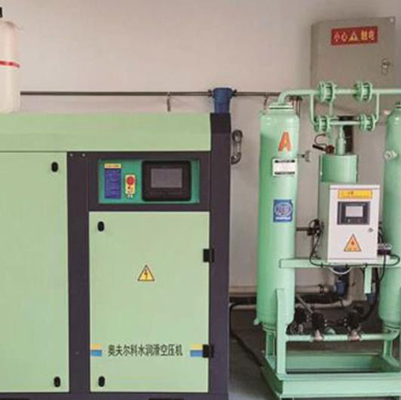
Key Applications in Heavy Industry
Water-lubricated oil-free screw air compressors are widely adopted in metallurgy, automotive manufacturing, shipbuilding, electronics, and high-grade spraying lines. In steel mills, they support pneumatic tools, descaling systems, and instrumentation that must not be exposed to oil vapors. In automotive and rail vehicle plants, these compressors feed paint booths, welding stations, and robotic assembly cells where air purity directly affects surface finish and equipment reliability. They are also ideal for power plants and chemical facilities that depend on continuous air supply for valves, actuators, and process control loops under demanding environmental conditions.
Performance Features and Technical Advantages
This compressor type uses a water-injected screw airend that provides excellent sealing and heat absorption, achieving high volumetric efficiency and lower discharge temperatures. Oil-free design removes the need for complex oil filtration and condensate treatment, simplifying the air treatment chain and improving ISO 8573 air quality classes. Variable speed drive options allow precise adjustment to fluctuating demand, reducing unloaded running time and energy consumption. The integrated cooling system, low friction operation, and optimized rotor profiles together extend component life, reduce maintenance intervals, and stabilize pressure, which is crucial for sensitive pneumatic equipment.
Importance in Industrial Processes and Sustainability
In modern heavy industry, stable, clean compressed air is as critical as electricity. Water-lubricated oil-free screw air compressors help protect downstream equipment such as dryers, filters, valves, and instrumentation from oil fouling, thereby minimizing unplanned shutdowns. Their lower energy use contributes directly to reduced carbon footprint and supports corporate ESG targets and ISO 50001 energy management programs. By cutting lubricant consumption and oily wastewater discharge, these systems assist plants in meeting strict environmental regulations while maintaining high productivity, long service life, and safe working conditions for operators.
Selection, Operation, and Maintenance Considerations
When specifying such compressors, engineers must evaluate required pressure, flow profile, installation environment, and existing air network design. Proper sizing prevents frequent starts, excessive cycling, or inefficient partial-load operation. Water quality management is also vital: filtration and anti-corrosion treatments keep the injection and cooling circuits clean, ensuring long-term efficiency. Routine inspections of airend clearances, seals, and control valves, combined with monitoring of energy consumption and pressure stability, help identify optimization opportunities and maintain consistent performance throughout the equipment’s service life.
1. Typical industrial sectors
They are used in steel, automotive, shipbuilding, power generation, electronics, and surface finishing lines where oil-free, stable compressed air is critical.
2. Core performance benefits
Key benefits include oil-free air quality, high energy efficiency, lower discharge temperature, reduced maintenance, and easier compliance with environmental standards.
3. Key points when choosing a unit
Users should focus on real air demand, pressure level, water quality, energy-saving configuration such as variable speed drive, and compatibility with the existing compressed air system.