fixed speed screw air compressor Vibration Issues That Signal Problems
News 2025-12-28
Vibration in fixed speed screw air compressors is more than a comfort issue; it is an acoustic signal that mechanical or process problems are developing. In industrial plants where compressed air drives critical tools, robotics, and process valves, abnormal vibration can shorten component life, reduce energy efficiency, and trigger unplanned downtime. Understanding how vibration behaves, what it indicates, and how to respond quickly is vital for maintaining stable air supply and protecting capital equipment.
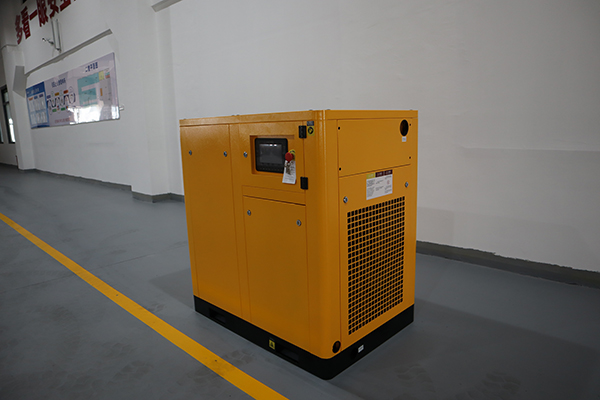
Typical Vibration Sources in Fixed Speed Screw Units
Normal operation generates low, steady vibration from the drive motor, coupling, and rotors. Problems arise when imbalance, misalignment, worn bearings, or loosened mounts disturb this pattern. In manufacturing lines, constant loading at a single speed can accelerate wear on drive end bearings and motor mounts. In dusty or high‑temperature environments, contamination and thermal expansion add extra stress, often detectable first as a subtle change in vibration frequency or amplitude.
Key Vibration Symptoms That Signal Trouble
Operators should take note when vibration intensity suddenly increases, when new tones or rattling noises appear, or when vibration is transmitted into connected piping. High axial vibration can indicate bearing damage or rotor thrust issues, while strong radial vibration may point to imbalance in the motor or coupling. Heat spots, oil leaks, and irregular pressure delivery often appear together with vibration, indicating advancing mechanical degradation that threatens compressor performance and air quality.
Impact on Performance, Energy Use, and Process Stability
Unchecked vibration directly affects performance. Misaligned shafts raise power consumption, eroding the energy advantage of a fixed speed screw air compressor in stable load applications. Excess vibration can damage seals, leading to oil carryover and reduced air purity in sensitive industries such as food packaging or electronics assembly. In automated production cells, even minor air pressure fluctuations caused by vibration‑related faults may reduce cycle accuracy, compromise product quality, and trigger costly stoppages.
Best Practices for Monitoring and Corrective Action
Modern plants should treat vibration data as a core maintenance parameter. Installing vibration sensors on motor bearings, compressor housings, and base frames enables trending and early fault diagnosis. When thresholds are exceeded, technicians should inspect alignment, foundation bolts, coupling condition, and lubrication quality. Balancing rotating elements, tightening anchors, replacing worn bearings, and isolating the compressor on suitable pads can restore stability. Integrating vibration monitoring into predictive maintenance programs preserves uptime and extends asset life.
1What causes sudden vibration increase?
Often it results from bearing failure, loose mounting bolts, or a damaged coupling that develops after overload or poor alignment.
2How does vibration affect energy efficiency?
Extra friction and misalignment force the motor to draw more power, raising specific energy consumption for the same air output.
3When should a compressor be shut down for vibration?
If vibration rises rapidly, is accompanied by loud knocking, or compromises piping stability, shut down immediately and investigate the root cause.